Color meanings
Warm colors such as red and orange feel energetic; cool colors such as blue and green feel calm. Meanings also depend on culture and context.
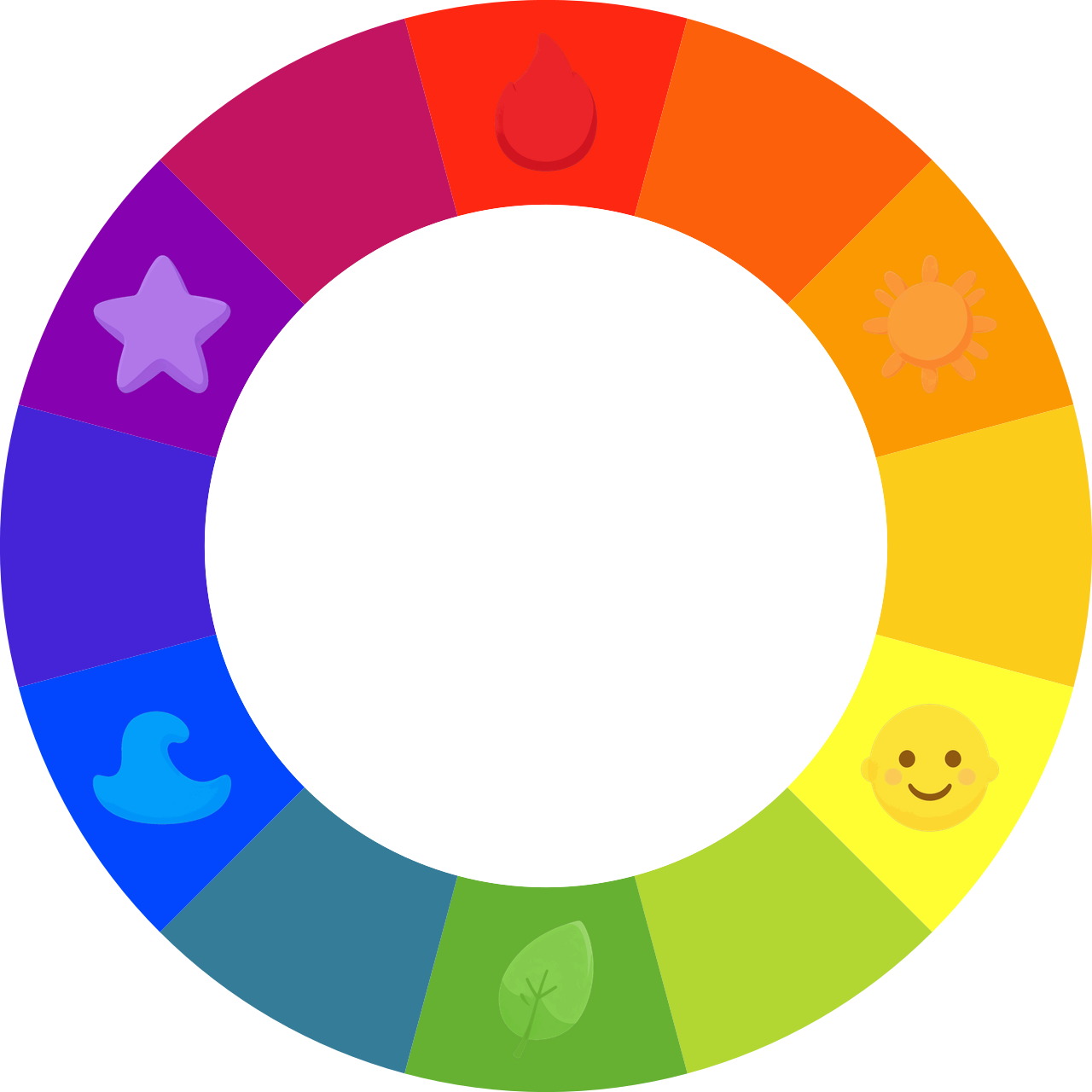
Color meanings
| color | often linked with |
|---|---|
| Red #FF0000 | energy, love, danger, warning; luck in China |
| Orange #FFA500 | warmth, fun, autumn, attention |
| Yellow #FFFF00 | sunshine, joy, caution |
| Green #008000 | nature, growth, health, "go" |
| Blue #0000FF | calm, trust, sky and sea |
| Purple #800080 | royalty, luxury, creativity, mystery |
| Pink #FFC0CB | care, sweetness, romance, play |
| Brown #A52A2A | earth, wood, comfort, reliability |
| Black #000000 | elegance, power, formality; mourning in many Western cultures |
| White #FFFFFF | light, cleanliness, simplicity; mourning in parts of East Asia |
| Gray #808080 | balance, neutrality, seriousness |
| Pastels #FFB3BA, #BAE1FF, #BAFFC9 | softness, calm, spring, childhood |
Printables
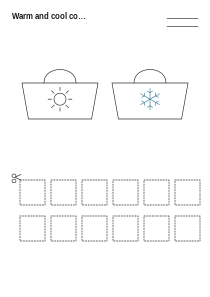
Warm and cool colors sorting sheet
What colors mean
Colors carry meanings because we connect them with things we know: red with fire and blood, green with plants, blue with sky and water. Over time, these links become habits. Red signs say "stop", green lights say "go", and white coats look clean. Designers use these habits to make a message feel right, such as blue for a bank or green for an eco brand.
The color psychology wheel
On a color psychology wheel, the warm half (red, orange, yellow) is linked with energy, warmth and action, and the cool half (green, blue, violet) with calm, trust and depth. Light tints feel softer and younger; dark shades feel serious and grown-up. Research on color and mood shows small, real effects, but much depends on the person, the culture and the situation, so treat these meanings as tendencies, not rules.
Meaning of pastel colors
Pastel colors feel gentle because they are close to white. Pastel blue suggests calm and peace, pastel green freshness and growth, pastel yellow cheer and lightness, pastel pink care and sweetness. That is why they are common in nurseries, spring designs and wellness brands.
Questions and answers
What do colors mean in color theory?
Warm colors suggest energy and warmth; cool colors suggest calm and trust. Each color also has its own common links, such as green for nature.
What is a color psychology wheel?
A color wheel with the feelings each color is often linked with, such as energy for red and calm for blue.
What do pastel colors mean?
Softness, calm, freshness and youth.
Do color meanings differ across cultures?
Yes. White means weddings in many Western countries and mourning in parts of East Asia; red means luck in China.