Tertiary colors
Tertiary colors are a primary color mixed with the secondary color next to it. There are six: red-orange, yellow-orange, yellow-green, blue-green, blue-violet and red-violet.
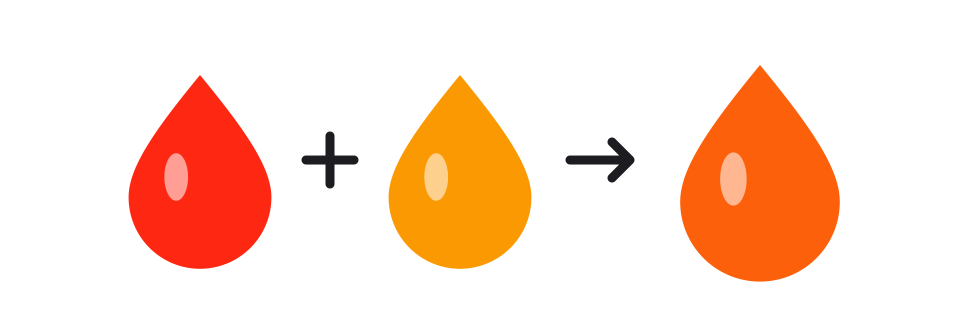
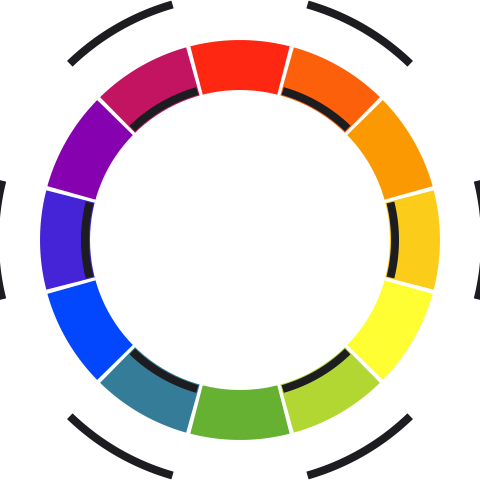
The 6 tertiary colors
| tertiary color | mix | HEX |
|---|---|---|
| Red-orange | red + orange | #FC600A |
| Yellow-orange | yellow + orange | #FCCC1A |
| Yellow-green | yellow + green | #B2D732 |
| Blue-green | blue + green | #347C98 |
| Blue-violet | blue + violet | #4424D6 |
| Red-violet | red + violet | #C21460 |
Printables
Tertiary colors worksheet
Blank color wheel to color in
What are tertiary colors?
Tertiary colors, also called intermediate colors, are made by mixing a primary color with a secondary color that sits next to it on the color wheel. Red and orange make red-orange; blue and green make blue-green. There are six tertiary colors, and with the 3 primaries and 3 secondaries they complete the 12-color wheel. Their names always start with the primary: red-orange, not orange-red.
Examples of tertiary colors
Many everyday color names are tertiary colors. Vermilion and tomato are red-oranges; amber and marigold are yellow-oranges; chartreuse and lime are yellow-greens; teal and turquoise are blue-greens; indigo and ultramarine are blue-violets; magenta and plum are red-violets. You'll find them in nature too: a teal peacock feather, a yellow-green leaf in spring.
Tertiary colors in art
Tertiary colors give a painting depth, because they bridge the strong primaries and secondaries. Three tertiaries spaced evenly on the wheel, such as red-orange, yellow-green and blue-violet, form a triad that looks lively but less loud than red, yellow and blue. Not every mix of a primary and a secondary is a tertiary: red and green, for example, are opposites and make brown.
Questions and answers
What are the 6 tertiary colors?
Red-orange, yellow-orange, yellow-green, blue-green, blue-violet and red-violet.
How do you make tertiary colors?
Mix a primary color with the secondary color next to it, such as blue and green for blue-green.
What is an example of a tertiary color?
Teal, a blue-green, or vermilion, a red-orange.
Are there 3 or 6 tertiary colors?
Six on the standard 12-color wheel.